 comparison
Business Consultant vs SCORE Mentor: Which You Need
Table of Contents
- What's the Difference Between a Business Consultant and a SCORE Mentor?
- When to Hire a Professional Consultant
- Benefits of SCORE Mentoring for Your Business
- Cost of Hiring a Business Consultant vs Free Mentoring
- Hybrid Advisory Models: Combining Both Approaches
- Vetting and Selecting the Right Advisor for Your Stage
- Conclusion
Last Updated: August 10, 2026
What's the Difference Between a Business Consultant and a SCORE Mentor?
A business consultant is a paid professional hired to solve specific problems, improve operations, or develop strategic plans for your company. A SCORE mentor is a volunteer business advisor, typically a retired executive, who provides free guidance through the SCORE organization, which operates under the Small Business Administration.
The distinction matters because each fills a different role in your business development journey. Consultants bring specialized expertise and accountability tied to measurable outcomes. Mentors offer experience-based wisdom and ongoing support without financial pressure. Understanding which you need depends on your business stage, the complexity of your challenge, and your budget.
At the California Business Development Center, we've worked with hundreds of business owners navigating this exact decision. The choice isn't always either-or. Many successful entrepreneurs use both, strategically deploying each resource where it adds the most value.
Here's what separates them in practice:
Consultants operate on project-based timelines with deliverables. You hire them to accomplish a specific goal: develop a 5-year strategic plan, restructure your operations, or navigate a complex acquisition. They're accountable for results. Their engagement ends when the project concludes.
SCORE mentors work on an ongoing, relationship-based model. They meet with you regularly to discuss challenges, brainstorm solutions, and hold you accountable to your own goals. The relationship can span years. There's no formal end date or deliverable checklist.
Consultants excel at depth. They dive deep into one problem and deliver expert analysis. Mentors excel at breadth. They've seen dozens of business situations and can connect dots across different areas of your operation.
The cost difference is stark. Consultants charge fees ranging widely depending on expertise and engagement type. SCORE mentors charge nothing, they volunteer their time. This doesn't mean mentoring is always better; it means the value proposition is fundamentally different.

When to Hire a Professional Consultant
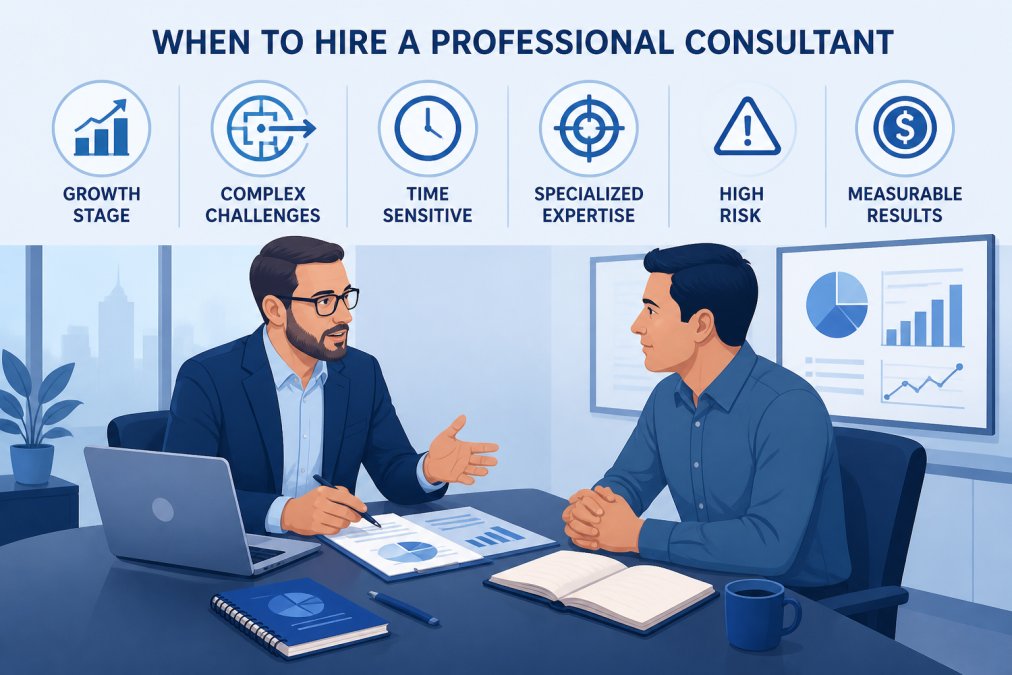
Hire a professional consultant when you face a problem that requires specialized expertise, you need a structured deliverable, or your business is at a critical inflection point where mistakes carry high costs.
Consultants make sense in these scenarios:
You're navigating a high-stakes transaction. Buying or selling a business, negotiating a major commercial lease, or restructuring your legal entity requires expertise most business owners don't possess. A misstep costs money. The California Business Development Center provides legal and transaction support specifically because these moments demand professional guidance. You need someone who understands California business law and has handled similar deals.
You need a structured strategic plan. If your team is stuck debating direction, you need an outside perspective to break the deadlock. A consultant conducts market analysis, evaluates your competitive position, and builds a written strategic plan your team can execute. This isn't mentoring, it's a defined deliverable with a timeline and scope.
You're solving an operational bottleneck. Your business is growing but cash flow is tangled, your team structure is inefficient, or your technology stack is fragmented. You need someone to audit your operations, identify the root cause, and recommend specific fixes. A mentor can discuss the problem. A consultant diagnoses it and prescribes the solution.
You lack expertise in a critical area. If you're launching internationally, implementing complex compliance requirements, or building a technology infrastructure, hire someone who's done it before. The cost of learning on the fly exceeds the consultant's fee.
You need accountability with deadlines. Mentors offer wisdom and encouragement. Consultants deliver specific outcomes by specific dates. If you need someone to push your team past inertia, consultants create that pressure through formal engagement terms.
The cost of hiring a professional consultant varies by scope and expertise. Rather than estimating, contact the California Business Development Center for a consultation to understand what your specific situation requires.
Benefits of SCORE Mentoring for Your Business
SCORE mentoring offers real value, particularly for early-stage founders and small business owners who need guidance without financial pressure. The organization connects you with experienced business leaders who volunteer their time specifically to help entrepreneurs.
The core benefits are substantial:
You get experienced perspective without cost. SCORE mentors are typically retired executives with business experience. They've run companies, managed teams, and weathered economic cycles. This experience has genuine value. The fact that it's free doesn't diminish the quality of insight, it changes the relationship dynamic. You're not buying time; you're accessing accumulated wisdom.
Mentoring is ongoing and relationship-based. Unlike a consultant's project timeline, mentoring relationships develop over months or years. Your mentor learns your business deeply, understands your personality and decision-making style, and can offer advice that's tailored to your specific context. This continuity creates accountability. You report back on progress, and the mentor tracks your growth.
SCORE covers a breadth of topics. The SCORE network includes mentors with expertise across industries, functions, and business challenges. Whether you're struggling with marketing strategy, financial management, hiring, or business model refinement, SCORE can connect you with someone who's navigated similar territory.
The relationship is pressure-free. Because mentors aren't paid and have no financial stake in your decisions, they can offer candid feedback without worrying about losing a contract. This freedom sometimes produces the most honest advice you'll hear.
SCORE provides structured resources. Beyond one-on-one mentoring, SCORE offers workshops, webinars, and templates covering common business challenges. These resources complement your mentoring relationship.
The limitation is scope. Mentors can't handle complex legal transactions, conduct detailed market research, or provide specialized technical expertise. They're generalists offering broad business acumen. For specific problems requiring deep expertise, mentoring reaches its ceiling quickly.
Cost of Hiring a Business Consultant vs Free Mentoring
The financial comparison is straightforward: SCORE mentoring is free. Professional consulting involves fees, which vary significantly based on engagement type and expertise.
SCHEDULE A FREE INITIAL CONSULTATION →
Understanding the cost structure helps you make the right choice:
| Engagement Type | Typical Structure | Best For |
|---|---|---|
| SCORE Mentoring | Free, ongoing | Early-stage, budget-conscious, broad guidance |
| Project-Based Consulting | Fixed fee or hourly rate | Specific deliverables, defined scope |
| Retainer Consulting | Monthly fee | Ongoing strategic support, continuous access |
| Specialized Legal/Transaction Support | Hourly or project-based | High-stakes deals, compliance, legal matters |
The cost of hiring a professional consultant depends on the scope of work, the consultant's experience level, and your location. Rather than guess at numbers, contact the California Business Development Center to discuss your specific needs and get a clear picture of what professional support would cost for your situation.
Here's the practical reality: free mentoring can save you from obvious mistakes and connect you with experienced perspective. But it won't structure a complex acquisition, navigate California commercial lease law, or conduct competitive analysis. For those situations, you need paid expertise.
Many business owners use both. They maintain a SCORE mentoring relationship for ongoing accountability and broad business wisdom, then hire consultants for specific high-stakes projects. This hybrid approach maximizes value from each resource.
Hybrid Advisory Models: Combining Both Approaches
The most effective advisory strategy often combines mentoring and consulting. You don't have to choose one or the other, you can deploy each where it adds the most value.
Here's how hybrid models work in practice:
Foundation layer: SCORE mentoring. Start with a SCORE mentor who understands your business broadly and holds you accountable to your goals. This relationship costs nothing and provides ongoing perspective. You meet regularly, discuss progress, and get feedback on your strategic decisions.
Specialist layer: Project-based consulting. When you face a specific challenge that requires deep expertise, restructuring your operations, negotiating a commercial lease, or developing a detailed financial model, you hire a consultant for that defined project. The consultant delivers the specific outcome, then the engagement ends.
Legal/transaction layer: Professional legal support. For high-stakes matters like business acquisition, entity formation, or commercial disputes, you work with a qualified business attorney. This isn't consulting; it's legal expertise that protects your interests.
The California Business Development Center operates within this hybrid model. We provide strategic consulting and legal support for situations where your business needs professional guidance beyond what mentoring can offer. Our team handles business transactions, legal compliance, and strategic planning, the specialized work that requires deep expertise and professional accountability.
The cost of hiring a professional consultant within a hybrid model is often lower than hiring consultants for everything. You're using paid expertise strategically, on specific high-value problems, rather than for ongoing general guidance.
Vetting and Selecting the Right Advisor for Your Stage
Choosing between a consultant and a mentor, or deciding to use both, depends on your business stage, the specific challenge you're facing, and your budget. Here's a framework for making the decision:
Early-stage (pre-revenue to $500K revenue). At this stage, you need broad business guidance more than specialized expertise. A SCORE mentor is often the right first step. They can help you validate your business model, think through your go-to-market strategy, and avoid common founder mistakes. The relationship is ongoing and costs nothing. If you face a specific challenge, forming your LLC, understanding California employment law, or structuring your first hire, bring in a consultant for that discrete project.
Growth stage ($500K to $3M revenue). Your business is operational but facing scaling challenges. You likely need both. A mentor provides ongoing accountability and helps you think through organizational growth. A consultant might help you restructure operations, implement financial systems, or develop a detailed strategic plan. The California Business Development Center works frequently with businesses at this stage, helping them build the operational foundation for continued growth.
Established stage ($3M+ revenue). Your business has proven its model. Now you need specialized expertise for specific initiatives. Consultants become more important. You might hire someone to evaluate acquisition targets, restructure your supply chain, or develop a detailed market expansion plan. Mentoring is less critical unless you're facing a fundamental business pivot or personal leadership challenge.
When selecting a specific advisor, use this vetting checklist:
- Relevant experience. Has this person worked in your industry or faced similar challenges? Generic business advice is less valuable than experience-specific guidance.
- Track record. What's their history of success? Ask for references and follow up.
- Communication style. Do they listen more than they talk? Do they ask questions before offering solutions? This matters more than you might think.
- Accountability. For consultants, are deliverables clearly defined? For mentors, will they commit to a regular meeting schedule?
- Specialization vs. generalism. Do you need deep expertise in one area, or broad business wisdom? Choose accordingly.
- Cost alignment. Does the investment make sense for your stage? Early-stage founders shouldn't spend $50K on consulting. Established companies shouldn't rely only on free mentoring.
The most important question: What specific problem are you trying to solve? A clear answer points you toward the right resource. If you're unsure, the California Business Development Center offers a free initial consultation to help you assess what you actually need.
Choosing between a business consultant and a SCORE mentor isn't a binary decision. The right advisory structure depends on your business stage, the complexity of your challenge, and your budget. Early-stage founders often benefit from free SCORE mentoring combined with targeted consulting on high-stakes decisions. Established companies typically need more specialized consulting support.
The California Business Development Center helps businesses at every stage make this decision. With over 35 years of experience and a team approach that includes business analysis, legal support, and strategic planning, we provide the specialized expertise that mentoring alone cannot. Schedule a free initial consultation to discuss your specific situation and determine whether professional consulting, mentoring, or a hybrid approach makes sense for your business. Our consultants can help you build the strategic business blueprint you need to achieve sustained growth and success.
Frequently Asked Questions
What are the key differences between a business consultant and a SCORE mentor?
A business consultant is typically a paid professional hired for specific, project-based work like developing business strategy, solving operational bottlenecks, or handling commercial leases. SCORE mentors are volunteer retired executives who provide free, ongoing guidance on general business acumen and professional development. Consultants deliver structured deliverables; mentors offer accountability and knowledge transfer over time. The choice depends on whether you need specialized expertise for a defined problem or long-term strategic guidance.
Is SCORE mentoring right for my startup or established business?
SCORE mentoring works well for both stages, but serves different purposes. Startups benefit from a mentor's experience with business lifecycle challenges and market analysis. Established businesses use mentors for accountability and scaling strategies. However, if you're facing a complex legal issue, negotiating a commercial lease, or need technical expertise in a specific area, a paid consultant may be more appropriate regardless of your business size.
How much does it cost to hire a business consultant compared to SCORE?
SCORE mentoring is completely free, funded by the Small Business Administration. Hiring a business consultant varies widely depending on scope, expertise, and engagement model. Freelance consultants may charge hourly rates or project fees, while specialized consultants (like those handling business transactions or legal compliance) typically cost more. Request a quote from your consultant to understand total investment before committing to long-term engagement.
Can a business consultant handle what a SCORE mentor cannot?
Yes. Consultants can provide specialized expertise in areas like legal compliance, contract negotiation, financial modeling, and industry-specific strategy that general mentors may not cover. If you need deliverables, a business plan, a compliance audit, or representation in a lease dispute, a consultant delivers those. Mentors excel at accountability, perspective, and guidance, but lack the formal authority or specialization for complex transactions or legal matters.
How do I know if a business consultant is worth the investment?
Evaluate ROI by defining your specific problem upfront: operational inefficiency, growth stagnation, legal risk, or skill gaps. A consultant is worth hiring if they address a bottleneck that's costing you revenue or time. Check credentials (years of relevant experience, past clients in your industry), ask for references, and confirm they customize advice to your business model rather than selling a generic playbook. Request a free initial consultation to assess fit before committing.
This article was written using GrandRanker