 how-to
Eviction Process for Commercial Tenants: Legal Guide
Table of Contents
- What Makes Commercial Tenant Eviction Different
- Legal Grounds to Start the Commercial Tenant Eviction Process
- Commercial Lease Termination Notice Requirements
- Filing the Unlawful Detainer Complaint and Summary Proceeding
- Legal Defenses for Commercial Tenants
- Mediation and Settlement Alternatives Before Trial
- Commercial Eviction Timeline and Writ of Possession
- Frequently Asked Questions
Last Updated: September 30, 2026
What Makes Commercial Tenant Eviction Different
The eviction process for commercial tenants legal framework gives landlords far more room to act than residential rules do, and the eviction process for commercial tenants legal steps differ at every stage. A commercial tenant usually has fewer protections, and courts expect both sides to follow the lease they signed.
Fewer Tenant Protections, Faster Timelines
Commercial tenants rarely get the same safeguards residential renters do. Many states skip mandatory grace periods and mediation steps for business leases. That means a landlord can move faster when rent goes unpaid.
Why Self-Help Lockouts Create Legal Liability
Changing the locks or shutting off utilities feels like the quick fix. It is also one of the fastest ways to turn a landlord into a defendant.
- Wrongful eviction claims can include money damages
- Tenants may recover attorney fees
- A single illegal lockout can void an otherwise valid case
Legal Grounds to Start the Commercial Tenant Eviction Process
You need a valid legal reason before any court will act. The two most common grounds are unpaid rent and holding over past the lease term.
Rent Arrears and Holdover Tenancy
Rent arrears means the tenant has fallen behind on rent. Holdover tenancy means the tenant stays after the lease ends without a new agreement. Both give a landlord grounds to act.
Curable vs. Incurable Lease Violations
A curable breach is a problem the tenant can fix, like late payment or an unauthorized sublease. An incurable breach cannot be fixed, such as repeated illegal activity on the premises.
| Breach Type | Example | Tenant's Chance to Fix |
|---|---|---|
| Curable | Unpaid rent, unauthorized sublease | Yes, within notice period |
| Incurable | Illegal activity, serious lease violation | No, eviction can proceed |
Commercial Lease Termination Notice Requirements
Every commercial eviction starts with a proper notice. The type of notice depends on the breach. Get this step wrong and the case stalls before it begins.
Notice to Pay Rent or Quit
A notice to pay rent or quit tells the tenant to pay what they owe or leave. It must state the exact amount and the deadline. Most states require a set number of days, often three to ten.
Service of Process and Proof of Delivery
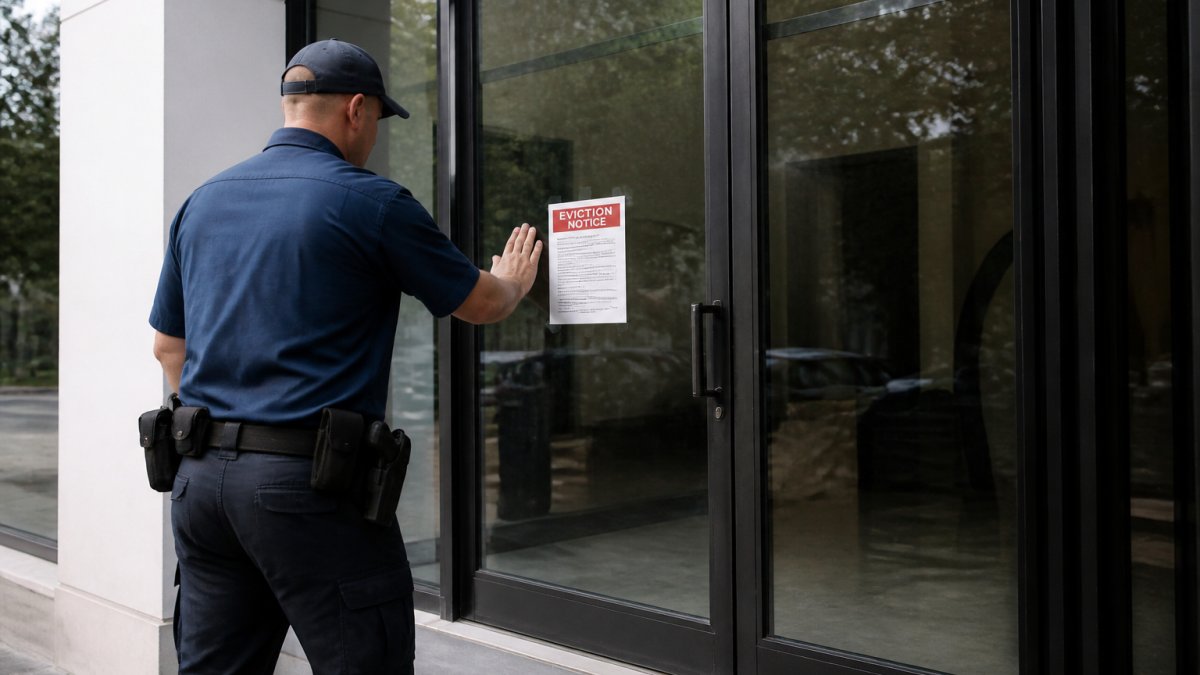
Service of process is how the notice gets delivered. Courts accept personal delivery, posting and mailing, or certified mail, depending on state law. Keep proof of every step.
- Note the date, time, and method of delivery
- Save receipts and photos
- Never rely on a verbal warning
Filing the Unlawful Detainer Complaint and Summary Proceeding
An unlawful detainer is the lawsuit a landlord files to remove a commercial tenant. It moves through a summary proceeding, a streamlined civil action designed to resolve possession quickly rather than to litigate every dispute between the parties. Most states codify this in a dedicated unlawful detainer statute, and that statute, not the general civil rules, controls the pace, the pleadings, and the available relief.
What a Summary Proceeding Can and Cannot Decide
The defining feature of a summary proceeding is its narrow scope. The court decides who has the right to possession. It generally does not resolve broad contract claims, partnership disputes, or tort counterclaims unless those claims are tightly tied to the right to possession. That limitation cuts both ways:
- For landlords: you get a faster path to a writ of possession, but you may need a separate civil action to collect large rent arrears or enforce other lease remedies.
- For tenants: counterclaims that fall outside the possession question are often severed or dismissed without prejudice, which means a tenant cannot easily turn a simple eviction into a sprawling business lawsuit.
Pleading Requirements in the Eviction Complaint
The eviction complaint is not a narrative. It is a checklist, and courts dismiss complaints that miss a required element. Most statutes require the complaint to state:
- The names of all parties and the jurisdiction facts (property location, amount of rent, and the statutory basis for the court's authority)
- A description of the commercial lease sufficient to identify the premises and the term
- The specific breach, for example, the exact rent amount past due and the date it was due, or the precise lease provision the tenant violated
- The notice that was served, when it was served, and how it was served
- A demand for possession and, where allowed, for rent arrears, damages, and costs
Service, Response, and Default Judgment
After filing, the tenant must be served with the summons and complaint under the rules for service of process. Commercial tenants are often corporations or LLCs, which means service may need to go to a registered agent rather than an individual owner. Getting the entity's agent wrong can invalidate service and force a refiling.
Why This Stage Is Where Cases Are Won or Lost
Competitors often describe the unlawful detainer as a single step. In practice it is three: pleading, service, and response. A defect in any one of them can dismiss the case, and a dismissal after months of litigation can mean the tenant stays in possession while you start over.
How This Differs From a Residential Eviction
Residential unlawful detainer statutes frequently add mandatory pre-filing steps, mediation referrals, rent-escrow requirements, or tenant-notice-of-rights attachments, that do not apply to business leases. Commercial landlords should not assume the residential forms or timelines transfer. The lease and the commercial unlawful detainer statute govern, and the two often diverge on notice periods, cure rights, and the availability of attorney fees.
SCHEDULE A FREE INITIAL CONSULTATION →
Legal Defenses for Commercial Tenants
Tenants can fight back, and some defenses are strong. Knowing them helps landlords prepare.
Common legal defenses for commercial tenants include:
- Improper notice or defective service of process
- The landlord failed a repair or maintenance duty
- The breach was curable and the tenant fixed it
- Retaliation or discrimination claims
- The landlord accepted rent after the breach
Mediation and Settlement Alternatives Before Trial
Not every dispute needs a courtroom. Mediation lets both sides negotiate a resolution with a neutral third party. It is faster and cheaper than litigation.
Settlement options often include:
- A payment plan for rent arrears
- A agreed move-out date
- A reduced rent period in exchange for leaving
Commercial Eviction Timeline and Writ of Possession
The commercial eviction timeline varies by state and by how hard the tenant fights. An uncontested case can wrap up in a few weeks. A contested one can take months, and a tenant that files counterclaims or bankruptcy can extend it further. The table below reflects common patterns, not guarantees, always confirm the statutory day counts in your jurisdiction.

| Stage | Typical Duration | Key Document |
|---|---|---|
| Notice period | 3-10 days (varies by state and breach type) | Notice to pay rent or quit |
| Filing and service | 1-3 weeks | Unlawful detainer complaint and summons |
| Tenant response window | 5-10 days | Answer or demurrer |
| Hearing or trial | 2-6 weeks | Eviction judgment |
| Writ issuance and posting | 1-3 weeks | Writ of possession |
| Sheriff lockout | 1-2 weeks after posting | Sheriff's notice and lockout |
What the Writ of Possession Actually Does
A writ of possession is the court order that authorizes a law enforcement officer, usually a sheriff or marshal, depending on the jurisdiction, to remove the tenant and restore possession to the landlord. The writ is not self-executing. The landlord must typically deliver the writ to the sheriff's civil division, pay a deposit or fee, and wait for the sheriff to schedule the lockout.
The Stay of Execution and Other Pauses
A stay of execution is a court-ordered pause on enforcement of the judgment. It may be granted automatically for a short period after judgment, or on motion if the tenant posts a bond or shows good cause. During a stay, the sheriff cannot act, and the clock effectively stops.
Other common pauses include:
- Appeals, a tenant appeal can delay enforcement, sometimes for months, and may require the landlord to post a bond or the tenant to post a rental deposit.
- Bankruptcy, a tenant bankruptcy filing triggers an automatic stay that halts the eviction until the bankruptcy court lifts it or the case is dismissed.
- Motions to vacate, a tenant motion to set aside the judgment can pause enforcement while the court decides.
Practical Trade-Offs That Move the Timeline
Landlords often focus on the statutory day counts and miss the operational ones. A few patterns recur:
- Serving the right entity on the first try saves weeks. A refiling after defective service resets the response clock.
- Choosing the correct court matters. Filing in a court without jurisdiction over the property or the amount in controversy can lead to dismissal and a fresh filing.
- Negotiating a stipulated judgment, where the tenant agrees to a move-out date and a payment schedule in exchange for a delay in enforcement, can close a case faster than a contested trial, even though it looks like a concession on paper.
- Coordinating with the sheriff's calendar is a real constraint. In busy jurisdictions, the gap between writ issuance and lockout can stretch beyond the statutory minimum.
Why Settlement Often Beats the Writ
A negotiated exit, a lease surrender, a payment plan for rent arrears, or a reduced-rent bridge period in exchange for a firm move-out date, frequently gets the landlord possession sooner than a contested writ. The landlord avoids trial costs, the tenant avoids a public eviction record, and both sides control the date.
Frequently Asked Questions
How long does the commercial tenant eviction process take from notice to lockout?
Most commercial evictions take 30 to 90 days from notice to writ of possession, depending on state law and court backlog. The notice period alone can run 3 to 30 days. The unlawful detainer lawsuit typically adds 3 to 6 weeks if uncontested, longer if the tenant files legal defenses. Contested evictions with discovery and hearings can stretch past 120 days. Check your jurisdiction's statutory requirements and current court scheduling before estimating your timeline.
Can a landlord evict a commercial tenant without going to court?
No. Every state requires a court-ordered eviction for commercial tenants, just as for residential ones. Self-help lockouts, changing locks, or removing property without a writ of possession expose the landlord to claims for wrongful eviction, breach of the lease, and damages. The only lawful path is the summary proceeding: file the unlawful detainer complaint, obtain a judgment, and let the sheriff enforce the writ. Cutting corners almost always costs more than the eviction itself.
What are the most common legal defenses for commercial tenants facing eviction?
Commercial tenants typically raise procedural defects, such as improper service of process or a defective notice to pay rent or quit, along with claims that the landlord breached the lease first, waived the violation through past acceptance of late payments, or accepted rent after the notice period. They may also challenge the amount claimed in rent arrears or argue the breach was curable and has been corrected. Each defense depends on the lease terms and the specific statutory requirements in your state.
What notice must a landlord give before terminating a commercial lease?
Commercial lease termination notice requirements come from two sources: the lease itself and state statute. A notice to pay rent or quit usually gives 3 to 10 days to cure rent arrears. A notice to cure a lease violation typically allows 10 to 30 days, while incurable breaches may allow immediate termination. The notice must be in writing, state the specific grounds, and be delivered according to the lease or statutory service rules. A defective notice can derail the entire eviction.