 how_to
Hiring Attorney for Commercial Lease: A 2026 Guide
Table of Contents
- Why Hire an Attorney for Your Commercial Lease
- When to Hire a Commercial Lease Attorney
- Understanding Your Lease Obligations and Liabilities
- Lease Audit Checklist: What Attorneys Review
- Attorney Fee Structures for Commercial Lease Work
- Negotiating Lease Terms With Your Landlord
- Comparing Property Types: Office, Retail, and Industrial
- Hiring an Attorney vs. Handling It Yourself: Pros and Cons
Hiring Attorney for Commercial Lease: A 2026 Guide
Last Updated: July 25, 2026
When you're negotiating a commercial lease, the stakes are high. A poorly drafted lease can lock your business into unfavorable terms for years, expose you to unexpected liabilities, or leave you vulnerable when circumstances change. At California Business Development Center, we've guided hundreds of business owners through commercial leasing decisions, and the pattern is clear: businesses that invest in legal counsel upfront avoid costly mistakes later.
Why Hire an Attorney for Your Commercial Lease
Commercial leases are binding contracts affecting your business for 3, 5, 10 years or more. Unlike residential leases, commercial agreements don't come with standard legal protections, every term is negotiable, and what you don't negotiate becomes your obligation.
A commercial lease attorney protects your business by identifying hidden costs, negotiating favorable renewal options, and ensuring you understand every liability you're accepting. Real estate agents represent the landlord's interests, not yours. Most business owners lack the legal expertise to spot clauses that seem minor but carry major consequences: unlimited rent escalation clauses, broad indemnification language, or CAM (common area maintenance) charges with no spending caps.
Protecting Your Business Interests
Your business interests extend far beyond monthly rent. They include your ability to modify the space, assign the lease if you sell, terminate early without massive penalties, and control rent increases over time.
A commercial lease attorney negotiates:
- Tenant improvement allowances: Money the landlord contributes toward buildout costs
- Exclusive use clauses: Restrictions preventing competing businesses in the same center
- Assignment and subletting rights: Your ability to transfer the lease if you relocate or sell
- Renewal options: Clear terms for extending the lease at predictable rates
- Early termination rights: Circumstances under which you can exit without penalty
- Maintenance and repair responsibilities: Who pays for what, and when
Without legal counsel, the landlord controls all these terms. With an attorney, you shift the balance and landlords are more likely to negotiate reasonable terms.
Avoiding Common Pitfalls in Commercial Leasing
The most common mistakes fall into three categories: misunderstanding lease obligations, accepting hidden costs, and failing to plan for change.
Many tenants sign without fully understanding their liabilities. In a triple net (NNN) lease, you pay base rent plus your share of property taxes, insurance, and CAM charges. CAM charges can increase dramatically year to year, and you're responsible for capital improvements the landlord decides to make. Others sign without understanding they're personally liable if the business fails to pay rent, meaning the landlord can pursue the owner's personal assets.
Another pitfall is accepting inflexible terms. You sign a five-year lease, then two years in your business needs to relocate or expand. Without an early termination clause or assignment rights, you're stuck paying rent on a space you're no longer using.
A third pitfall is failing to negotiate renewal terms upfront. Many tenants assume they can renegotiate at renewal. In reality, landlords often push for above-market rates when renewal approaches, knowing tenants have invested in the space and face relocation costs.
When to Hire a Commercial Lease Attorney
The best time to hire a commercial lease attorney is before you sign. The worst time is after you've already committed.
Lease Negotiation and Drafting Phases
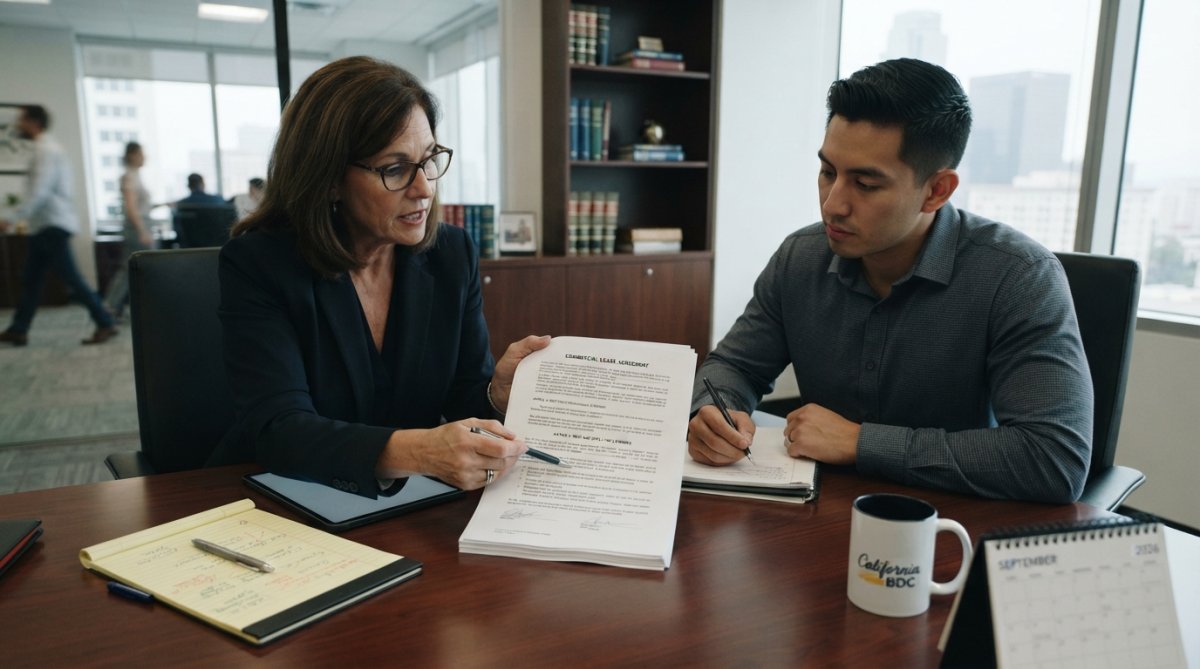
Hire an attorney as soon as you have a letter of intent or preliminary lease terms from the landlord. This is when you have maximum leverage. During negotiation, your attorney reviews the landlord's proposed lease, identifies problematic clauses, and drafts counterproposals. They flag terms that are one-sided, negotiate rates and responsibilities, and ensure the lease reflects what you actually agreed to verbally. The cost typically ranges from a few hundred to a few thousand dollars, depending on complexity, almost always less than the cost of living with an unfavorable lease for years.
Lease Renewal and Termination Scenarios
Hire an attorney again when your lease renewal approaches or when you need to terminate early. At renewal, your attorney reviews the landlord's renewal terms and negotiates new rates, ensuring the renewal reflects current market conditions. If you need to terminate early, an attorney reviews your lease to identify termination rights, calculates penalties, and negotiates an early exit if possible.
Understanding Your Lease Obligations and Liabilities
A commercial lease creates multiple financial and legal obligations beyond base rent.
Triple Net (NNN) Leases and Hidden Costs
In a triple net lease, you pay base rent plus three additional costs: property taxes, insurance, and CAM charges. CAM stands for common area maintenance and covers costs for maintaining shared spaces: parking lots, hallways, landscaping, common restrooms, and building systems.
The problem is that CAM charges often lack defined limits. A landlord can decide to repave the parking lot, upgrade the HVAC system, or add security cameras, and tenants share the cost. A commercial lease attorney negotiates CAM caps, requires the landlord to provide annual CAM accounting, and defines what costs qualify as CAM. They may also negotiate a base year, meaning CAM increases only apply to costs above a certain threshold.
Security Deposits and Rent Escalation Clauses
Security deposits in commercial leases are often larger than residential deposits and subject to fewer regulations. An attorney ensures your security deposit terms are clear: how much, how it's held, and under what circumstances the landlord can apply it.
Rent escalation clauses determine how your rent increases over the lease term. Fixed escalations (e.g., 3% annually) are predictable. Inflation-tied escalations protect you in low-inflation years but expose you in high-inflation periods. An attorney negotiates escalation terms that match your business's expected growth.
Lease Audit Checklist: What Attorneys Review
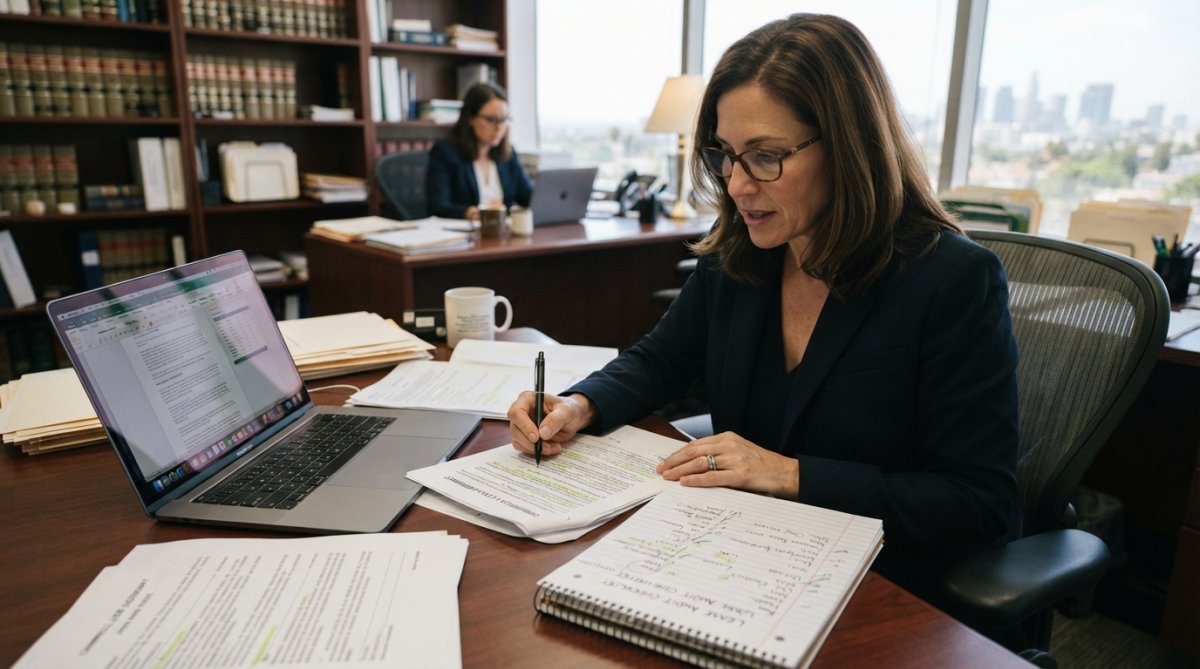
When you hire a commercial lease attorney, they perform a systematic review of every section.
Critical Terms and Exit Strategy Clauses
A commercial lease attorney reviews the lease section by section, flagging problematic language and ensuring critical terms are present:
Lease term and renewal options: Is the lease length appropriate for your business? Are renewal options clearly defined with specific rent amounts or formulas?
Rent and escalations: Is base rent competitive? Are escalations reasonable and predictable?
Use clause: Does the lease restrict how you can use the space? Can you sublease or assign?
Maintenance and repair: Who maintains the roof, HVAC, parking lot, and building structure? Who pays for repairs?
Insurance and indemnification: Are insurance requirements reasonable? Does the indemnification clause require you to cover the landlord's negligence?
Default and remedies: What constitutes default? What notice and cure periods do you have?
Termination rights: Can you terminate early? Under what circumstances? What penalties apply?
Exit strategy clauses are critical. A good lease includes early termination for convenience, termination for disability, assignment and subletting rights, and relocation rights. Without these clauses, you're locked in.
Attorney Fee Structures for Commercial Lease Work
Understanding how commercial lease attorneys charge helps you budget and compare options.
Hourly Rates vs. Flat Fees vs. Contingency
Hourly rates are the most common structure. Commercial lease attorneys typically charge between $150-$400 per hour. A simple lease review might take 5-10 hours ($750-$4,000). A complex negotiation might take 20-40 hours ($3,000-$16,000).
Flat fees are becoming more common. An attorney quotes a fixed price for reviewing and negotiating a lease, typically $1,500-$5,000 depending on complexity. Flat fees are predictable but can be risky for complex negotiations.
Contingency fees are rare in lease work. Some attorneys charge a percentage of rent savings they negotiate. This aligns incentives but is uncommon because the value of negotiated terms isn't always quantifiable in dollars.
Ask about fee structure upfront and what's included: Does the fee cover negotiation? Follow-up with the landlord? Reviewing the final signed lease?
Negotiating Lease Terms With Your Landlord
Once you've hired an attorney, the negotiation phase begins.
Common Negotiation Strategies and Red Flags
Lead with market data. Research comparable leases in your market. What's the average rent per square foot? What are typical escalation rates? Armed with data, your attorney can argue that unfavorable terms are below market.
Prioritize your must-haves. You can't negotiate everything. Identify 3-5 terms that matter most to your business and focus negotiation effort on your priorities.
Propose alternatives, not just rejections. When the landlord proposes unfavorable terms, propose an alternative. If the landlord wants unlimited CAM charges, propose a 5% annual cap. Alternatives show good faith and move negotiations forward.
Red flags to watch for:
- Unlimited CAM charges: You're exposed to unexpected cost increases
- Broad indemnification: You're liable for injuries caused by the landlord's negligence
- No renewal options: You have no security beyond the lease term
- Personal guarantee without limits: You're liable even after the lease ends
- Exclusive use restrictions: Your business faces direct competition
- Inflexible assignment terms: You can't sell your business or relocate
When you spot red flags, your attorney flags them explicitly and proposes changes. Many landlords expect negotiation and will move on problematic terms.
Comparing Property Types: Office, Retail, and Industrial
Commercial leases vary significantly by property type.
Office leases typically have the most standard terms. Rent is quoted as cost per square foot annually. Escalations are usually 2-3% annually. Office leases often include renewal options and assignment rights because office tenants are relatively mobile.
Retail leases are more negotiable because retail spaces are location-specific. Landlords compete for retail tenants because retail generates foot traffic. Retail leases often include percentage rent clauses, where you pay base rent plus a percentage of sales above a threshold. Your attorney negotiates the percentage rate and sales threshold carefully.
Industrial leases are typically longer-term (10+ years) because industrial tenants invest in buildout and equipment. Industrial leases often include substantial tenant improvement allowances. Your attorney negotiates substantial TI allowances and long renewal terms.
Hiring an Attorney vs. Handling It Yourself: Pros and Cons
Some business owners try to negotiate leases without an attorney to save money.
When DIY Leasing Works (and When It Doesn't)
DIY leasing works when:
- The lease is short-term (1-2 years) with modest rent
- The space is simple with no special buildout requirements
- You're leasing from a small landlord with a simple lease form
- You have prior commercial leasing experience
- The lease terms are market-standard with no unusual clauses
DIY leasing fails when:
- The lease is long-term (5+ years) with significant rent obligations
- The space requires substantial buildout or modifications
- You're leasing from a large property management company with aggressive lease language
- You have no prior commercial leasing experience
- The lease includes unusual clauses, CAM charges, or complex escalation formulas
Consider the math: If an attorney saves you $100/month in rent over a five-year lease, that's $6,000 in savings. An attorney fee of $2,000-$3,000 pays for itself many times over.
| Scenario | DIY Cost | Attorney Cost | Recommendation |
|---|---|---|---|
| 2-year lease, $2,000/month, simple terms | $500 research | $500-$1,000 | DIY acceptable |
| 5-year lease, $5,000/month, triple net | $500 research | $2,000-$4,000 | Hire attorney |
| 10-year industrial lease, $10,000/month | $500 research | $3,000-$6,000 | Hire attorney |
| Lease renewal, existing terms | $500 research | $1,000-$2,000 | Hire attorney |
The larger and longer the lease, the more an attorney pays for themselves.
Navigating a commercial lease without legal guidance exposes your business to unnecessary risk. A commercial lease attorney reviews every clause, negotiates favorable terms, and protects your interests for years to come. Whether you're signing your first commercial lease or renewing an existing one, legal counsel ensures you understand what you're agreeing to and that the terms protect your business.
At California Business Development Center, we understand that business success depends on solid legal foundations. Our team of experienced business attorneys specializes in commercial leases, business contracts, and negotiations. We provide clear guidance on lease terms, help you understand your obligations, and ensure you negotiate from a position of strength. SCHEDULE A FREE INITIAL CONSULTATION to discuss your commercial lease and learn how we can protect your business interests.
Frequently Asked Questions
What does a commercial lease attorney actually do when reviewing a lease agreement?
A commercial lease attorney performs a comprehensive contract review to identify unfavorable terms, hidden liabilities, and missing protections. They examine lease obligations, CAM charges, renewal options, termination clauses, and subleasing restrictions. They also verify zoning compliance, check security deposit terms, and flag rent escalation clauses that could strain your budget. Their goal is to protect your business interests before you sign a binding contract.
How much should I expect to pay for hiring an attorney for commercial lease work?
Attorney fees vary based on lease complexity, your location, and the attorney's experience. Some attorneys charge hourly rates, others offer flat fees for lease review, and some use hybrid models. The cost depends on factors like property type (office space, retail lease, or industrial property), lease length, and negotiation scope. Request a quote from your attorney to understand pricing before engaging their services. Many offer free initial consultations to discuss your specific needs.
What are hidden costs in triple net (NNN) leases that attorneys help identify?
Triple net leases shift operating costs to tenants, including property taxes, insurance, and maintenance (CAM charges). Attorneys review these clauses to identify excessive CAM charge calculations, undefined maintenance responsibilities, and surprise cost escalations. They also check for caps on annual increases and clarify what expenses the landlord versus tenant covers. Without legal review, tenants often face unexpected liability for building-wide repairs or inflated shared costs.
When should I hire an attorney, before or after negotiating lease terms with my landlord?
Ideally, hire an attorney early in the lease negotiation process. An experienced real estate attorney can advise on favorable lease terms before you enter binding discussions. They help you understand tenant rights, identify negotiation leverage points, and draft counteroffers. If you've already negotiated informally, an attorney can still review the proposed agreement to catch unfavorable terms before you sign. Early involvement prevents costly mistakes and strengthens your negotiating position.
External Sources
[EXTERNAL_LINK: Small Business Administration guidance on commercial real estate | sba.gov]
[EXTERNAL_LINK: American Bar Association resources on commercial leasing | americanbar.org]
[EXTERNAL_LINK: Commercial Real Estate Development Association best practices for lease negotiation | naiop.org]
This article was written using GrandRanker