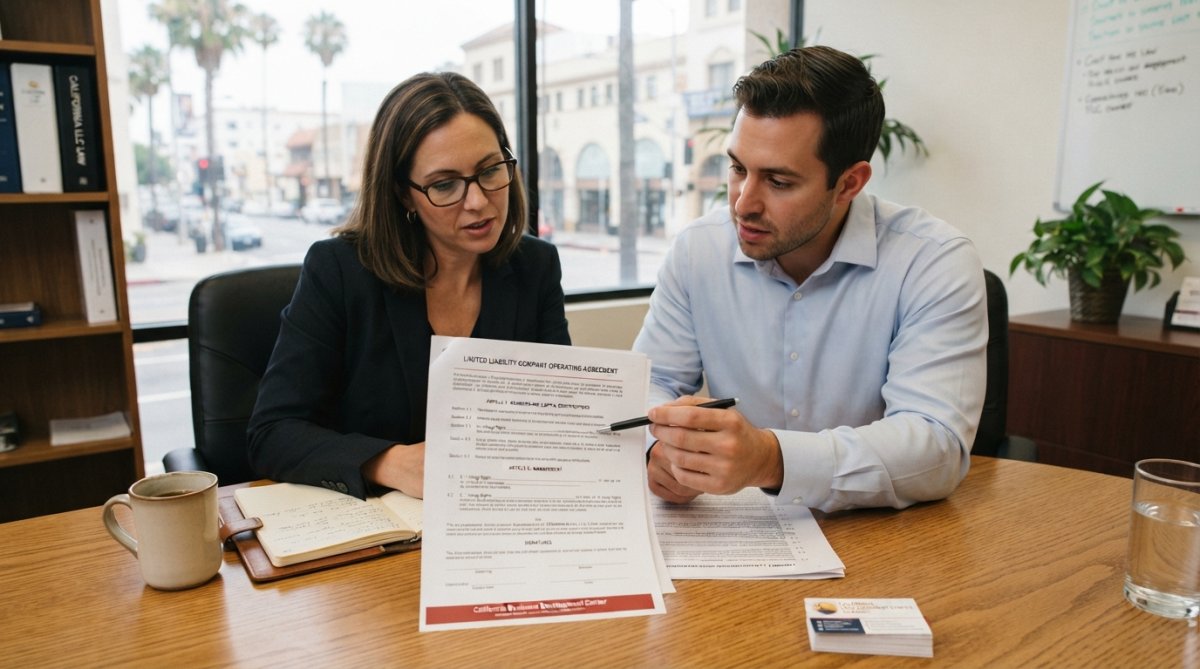
 how-to guide
Hiring a Business Attorney for Contract Review: A Step-by-Step Guide
Table of Contents
- Why Hiring a Business Attorney for Contract Review Matters
- What to Look for in a Business Contract Lawyer
- The Legal Contract Review Process: Step-by-Step
- Red-Flag Clauses Your Business Contract Lawyer Should Catch
- Cost of Contract Review Lawyer Services: What to Expect
- Attorney for Contract Drafting and Review: When to Hire Early
- Contract Review Checklist for Business Owners
- AI vs. Human Attorney in Contract Review: Making the Right Choice
Hiring a Business Attorney for Contract Review: A Step-by-Step Guide
Last Updated: July 26, 2026
When you're running a business, contracts are everywhere. You sign them with vendors, clients, employees, and landlords. Most business owners assume these agreements are standard and move forward without scrutiny. But a single overlooked clause can cost tens of thousands of dollars or expose your business to unexpected liability. This is where hiring a business attorney for contract review becomes essential. At California Business Development Center, we've seen firsthand how professional legal review prevents costly disputes and protects business interests. Below, we'll walk you through exactly how to find the right contract review attorney, what the process looks like, and which red flags your lawyer should catch before you sign anything.
Why Hiring a Business Attorney for Contract Review Matters
Most contract disputes start the same way: a business owner signs an agreement without understanding the full implications. They focus on headline terms, price, timeline, deliverables, and miss the fine print that determines what happens when things go wrong. A business attorney for contract review acts as your safety net, identifying risks before they become problems.
Professional legal review protects your business interests in three concrete ways. First, it clarifies contractual obligations so you understand exactly what you're committing to. Second, it identifies liability limitations and ensures they favor your business, not just the other party. Third, it catches ambiguous payment terms and intellectual property rights issues before disputes arise.
What to Look for in a Business Contract Lawyer
Not all attorneys are created equal. A contract review attorney should have specific expertise areas that match your business type and the complexity of your agreements.
Expertise areas and specialization matter enormously. If you're in e-commerce, you need someone who understands retail compliance and consumer protection laws. If you're in technology, your attorney should know intellectual property rights and SaaS agreements. If you're in healthcare, regulatory compliance becomes critical. The best contract review lawyer has handled agreements similar to yours before.
When evaluating potential attorneys, ask about their experience with your specific contract types: buy-sell agreements, commercial leases, employment contracts, and non-disclosure agreements. The more directly relevant their experience, the faster they'll spot issues.

Questions to ask before hiring include:
- How many years have you handled contract review specifically?
- What industries do you specialize in?
- Can you provide references from other business clients?
- Do you charge hourly rates or flat fees for contract reviews?
- How long does a typical review take?
- Will you explain recommendations in plain English, not legal jargon?
- Are you available for follow-up questions after the initial review?
The Legal Contract Review Process: Step-by-Step
Understanding what happens during a professional legal contract review helps you prepare and get maximum value from the engagement.
Step 1: Gather and organize your contracts. Before meeting with your attorney, collect all relevant documents including the main contract, amendments, exhibits, and correspondence with the other party. Organize them chronologically and clearly mark which version you're considering signing. This upfront work saves time and reduces billable hours.
Step 2: Provide context to your attorney. Explain the business relationship, what you're trying to accomplish, and any concerns you already have. Share details about the other party and whether this is a one-time transaction or ongoing relationship. Context helps your attorney prioritize which clauses matter most and which risks are acceptable.
Step 3: Review the attorney's analysis and recommendations. Your attorney will deliver a written analysis highlighting key issues, potential risks, and recommended changes. Read it carefully and ask questions about anything you don't understand. Good contract review lawyers help you distinguish between real risks and minor concerns.
Step 4: Negotiate and finalize terms. Armed with your attorney's recommendations, propose changes to the other party. Your attorney can help draft language that protects your interests while remaining reasonable enough that negotiations move forward. Not every recommended change will be accepted, and that's normal.
Red-Flag Clauses Your Business Contract Lawyer Should Catch
Certain contract language patterns consistently create problems. A skilled attorney will spot these red flags and recommend revisions before you sign.
Unlimited liability and indemnification clauses are among the most dangerous. An indemnification clause requires you to cover the other party's legal costs if a third party sues them. Look for clauses that cap your liability at a specific amount (like one year's fees) or that limit indemnification to claims caused by your negligence, not theirs. Unlimited liability can bankrupt a small business.
Non-compete and non-disclosure agreement concerns often go unaddressed. A non-compete clause that prevents you from working with competitors for five years across the entire United States is unenforceable in most states, but it might still be in your contract. A skilled attorney will spot overly broad restrictions and negotiate narrower terms. Non-disclosure agreements should protect confidential information without preventing you from using general skills and knowledge you've gained.
Ambiguous payment terms and intellectual property rights create ongoing disputes. A contract that says "payment due upon completion" leaves room for argument about what "completion" means. Get specific: "Payment due within 30 days of invoice." On intellectual property, clarify who owns what. Does the client own the final product, the underlying methodology, or both? Vague IP language leads to conflicts years later.
| Red-Flag Type | What to Watch For | Recommended Fix |
|---|---|---|
| Unlimited Liability | No cap on damages | Cap at 1-2x annual contract value |
| Indemnification | You pay their legal costs for any claim | Limit to claims caused by your actions |
| Non-Compete | Broad geographic or temporal scope | Narrow to specific geography, 1-2 years max |
| Payment Terms | Vague completion criteria | Specify invoice date, payment deadline |
| IP Rights | Unclear ownership of work product | Define what client owns vs. what you retain |
Cost of Contract Review Lawyer Services: What to Expect
Pricing for contract review varies significantly based on complexity, attorney experience, and your location. Understanding these cost factors helps you budget appropriately.
Hourly rates versus flat fees represent two different pricing models. Many attorneys charge hourly rates ranging from $150 to $400+ per hour depending on experience and location. A straightforward vendor contract might take 2-3 hours of review, while a complex commercial lease could take 8-10 hours. Flat fees are increasingly common for contract review; an attorney might charge $500 for a simple agreement or $2,500 for a complex one.
Factors that affect pricing include contract complexity, attorney experience level, and your location. A simple service agreement takes less time than a multi-party real estate transaction. An attorney with 20 years of experience charges more than one with 5 years, but they'll also work faster and spot issues more quickly. Attorneys in major metropolitan areas typically charge more than those in smaller cities.
Cost-benefit analysis of professional review is straightforward. If a contract involves significant money or long-term commitment, professional review is worth the investment. A $1,000 review that prevents a $25,000 dispute is an excellent return. If you're signing a $200 one-time service agreement with a reputable vendor, you might skip the attorney and accept the risk.
Attorney for Contract Drafting and Review: When to Hire Early
Many business owners make the mistake of bringing an attorney in after a contract is drafted. Smarter businesses involve legal counsel from the beginning.
Why involvement at the drafting stage saves money is simple: it's easier to build protection in than to negotiate it in later. When you're drafting from scratch, you control the language. You can build in the liability caps, payment terms, and IP protections you want. When you're negotiating an agreement the other party drafted, you're asking them to remove protections they've already included.
Contract types requiring legal expertise from the start include buy-sell agreements, partnership documents, and commercial leases. These foundational agreements determine how your business operates and what happens if relationships dissolve. A buy-sell agreement that doesn't clearly specify how partners buy each other out during a dispute can destroy a business relationship. For these critical agreements, hire your attorney during drafting, not after.
For routine agreements like service contracts with established vendors, you might use a template and have an attorney review it. For foundational agreements that define your business structure or major relationships, involve your attorney from the start.
Contract Review Checklist for Business Owners
Before signing any contract, use this checklist to ensure you've covered essential elements. This isn't a substitute for legal review, but it helps you spot obvious issues.
Essential elements to verify before signing:
- Have you read the entire agreement, including exhibits and appendices?
- Do you understand what you're committing to? Can you explain it to someone else?
- Are payment terms specific? (Not "upon completion" but "within 30 days of invoice")
- Is the liability capped at a reasonable amount?
- Does the indemnification clause limit your exposure?
- Are non-compete or non-disclosure restrictions reasonable in scope and duration?
- Is intellectual property ownership clearly defined?
- Who is responsible for what? (Maintenance, insurance, compliance)
- What happens if either party breaches the agreement?
- Is there a termination clause? How much notice is required?
- Are there any automatic renewal clauses? How do you cancel?
- Have you confirmed the other party's legal name and authority to sign?
- Does the agreement reference other documents you haven't seen?
Documentation and record-keeping matter for future reference. Keep signed contracts organized by type and date. Create a simple spreadsheet listing each contract, the other party, key terms, renewal dates, and termination conditions. When disputes arise, you'll need to reference the exact language.
AI vs. Human Attorney in Contract Review: Making the Right Choice
AI contract review tools have emerged as an alternative to hiring a business attorney. Understanding what each approach offers helps you make the right choice for your situation.
What AI contract tools can and cannot do is important to understand. AI tools excel at flagging standard red-flag language like indemnification clauses, liability limitations, and non-compete restrictions. They work quickly and cost far less than hiring an attorney. However, AI tools lack context. They don't understand your specific business, your risk tolerance, or the relationship with the other party. They flag every potential issue without distinguishing between critical risks and minor concerns.
When human legal expertise is essential includes complex agreements, unusual circumstances, and high-stakes transactions. If you're buying or selling a business, hiring a business attorney for contract review is non-negotiable. If you're entering a multi-year partnership with significant financial commitment, human expertise pays for itself. If the contract includes unusual terms or you're negotiating with a sophisticated party, you need someone who understands negotiation strategy.
The hybrid approach works well for many businesses: use an AI tool for initial screening of routine contracts, then have a human attorney review anything flagged as problematic or any agreement that involves significant commitment.
Contract disputes are expensive, time-consuming, and preventable. The difference between a business that thrives and one that gets tangled in legal problems often comes down to one decision: taking time to review agreements carefully before signing. California Business Development Center offers comprehensive contract review services with experienced business attorneys who understand California regulations, commercial transactions, and the specific challenges growing businesses face. Whether you need a quick review of a vendor agreement or full support negotiating a partnership deal, professional legal guidance protects your interests and gives you confidence moving forward. Schedule a free initial consultation to discuss your contract review needs and learn how we can support your business success.
Frequently Asked Questions
Do I really need a business attorney for contract review?
Yes, hiring a business attorney for contract review protects your interests by identifying hidden risks, unfavorable terms, and potential breach of contract scenarios before you sign. Even seemingly standard contracts can contain clauses that expose your business to significant liability. An attorney ensures contractual obligations are clear, fair, and enforceable in your favor. The cost of professional review is typically far less than the cost of disputes or legal problems later.
What does a legal contract review typically include?
A legal contract review examines all terms and conditions, identifies unfavorable clauses, assesses liability limitation provisions, verifies intellectual property rights protection, and flags non-compete or non-disclosure agreement issues. Your attorney will check for regulatory compliance, ambiguous language, missing critical terms, and risk assessment of the entire agreement. They provide written recommendations and often negotiate revisions to protect your business interests and clarify contractual obligations.
How much does it cost to hire a lawyer for contract review?
Pricing for contract review depends on contract complexity, length, and your attorney's experience level. Some attorneys charge hourly rates, while others offer flat fees for specific contract types. For current pricing information and to understand what factors affect cost in your situation, contact a business attorney directly for a quote. Many offer free initial consultations to discuss your needs and provide transparent cost estimates.
What red flags should I watch for in a contract before hiring an attorney?
Watch for unlimited liability clauses, overly broad indemnification provisions, restrictive non-compete agreements, vague payment terms, and unclear intellectual property rights. Also flag arbitration clauses that limit your legal options, one-sided termination conditions, and ambiguous confidentiality requirements. If a contract uses unusual language, contains blanks, or seems heavily weighted toward the other party, these are signs you need legal counsel. An attorney can identify these issues and negotiate better terms protecting your business.
This article was written using GrandRanker