 ultimate-guide
How to Scale Small Business: A 7-Step Strategic Guide
Table of Contents
- Distinguish Between Growth and Scaling Your Small Business
- When to Scale a Business: Readiness Indicators
- Build a Scalable Business Infrastructure
- Scaling Challenges for Small Businesses and How to Overcome Them
- Implement Small Business Automation Tools to Drive Efficiency
- Assemble and Lead a High-Performing Team
- Secure Capital and Manage Cash Flow for Scaling
- Conclusion: Your Roadmap to Sustainable Scaling
Last Updated: August 7, 2026
Distinguish Between Growth and Scaling Your Small Business
Growth and scaling are fundamentally different. Growth means increasing revenue by doing more of what you're already doing, hiring more salespeople, adding customers, or expanding production. It's linear and requires proportional increases in resources and headcount.
Scaling means increasing revenue without proportional increases in cost or headcount. You build systems and automate processes so your business generates more revenue with the same or fewer resources per unit. Your profit margins improve even as revenue grows.
According to Harvard Business Review's research on growth strategies, companies that confuse growth with scaling often find themselves trapped in diminishing returns, hiring aggressively while watching margins compress. Before you hire or expand, ask: can we generate more revenue without proportional increases in resources? If no, you have a growth problem. If yes, you're ready to scale.
When to Scale a Business: Readiness Indicators
Not every business is ready to scale. Attempting to scale too early is one of the most common failure points for small businesses.
You have repeatable, profitable unit economics. Your business model must work consistently. You should be able to acquire a customer, deliver your product or service, and generate a predictable profit margin repeatedly. Scaling amplifies everything, including inconsistency and unprofitability.
Your core team understands the business deeply. Scaling requires delegation. If you're the only person who understands how your business works, you'll become the bottleneck. Your team needs to be capable enough that you can step back from day-to-day execution.
You have documented processes for your critical functions. If your processes live only in people's heads, you cannot scale, train new people, or maintain quality. Document how you acquire customers, deliver your product or service, handle customer support, and manage finances.
You have capital or cash flow to invest in infrastructure. Scaling requires upfront investment in technology, automation tools, training, and possibly new team members before you see revenue benefits. You need either external capital or sufficient cash flow to fund scaling without jeopardizing your existing business.
Build a Scalable Business Infrastructure
Your business infrastructure is the backbone that allows you to scale. It includes your technology stack, operational processes, financial systems, and organizational structure.
Start with your technology stack. Identify core systems your business depends on: CRM, accounting software, project management tools, and industry-specific software. These tools should integrate with each other and automate data flow. Manual data entry and disconnected tools are scaling killers.
Document your operational processes. Create a process map for how customers move through your business from initial contact to delivery to support. Identify decision points, handoffs, and places where quality can vary. A scalable business has documented, repeatable processes that maintain quality as volume increases.
Your financial infrastructure is critical. You need real-time visibility into key metrics: customer acquisition cost, lifetime value, cash flow, gross margin, and unit economics. Monthly financial reviews at minimum are essential for scaling. This allows you to spot problems early and adjust before they become crises.
Organizational structure matters too. As you scale, move from a flat structure where everyone reports to you to one with clear reporting lines, defined roles, and delegated authority. People need to know who they report to, what they're responsible for, and how their work connects to overall business goals.
Scaling Challenges for Small Businesses and How to Overcome Them
The founder bottleneck. You're the constraint. Every decision flows through you. Every customer issue escalates to you.
The solution is systematic delegation. Document your decision-making criteria. Create a decision matrix. Train your team on the criteria. Then let them make decisions, even if slightly differently than you would.
Cash flow strain during scaling. Scaling requires upfront investment before you see revenue benefits. Many businesses run out of cash mid-scaling and have to contract.
Build a detailed 12-month cash flow projection including investment timing and expected returns. If the projection shows you running out of cash, you need to raise capital, slow your scaling timeline, or find ways to generate revenue faster.
Quality degradation as volume increases. When you scale too fast, quality often suffers. Customers notice and your reputation takes a hit.
Document your quality standards and measure them. Train your team on them. Add checkpoints to catch quality issues before they reach customers. It's better to scale slower and maintain quality than to scale fast and damage your reputation.
Team culture erosion. As you scale and add new team members, early intimacy disappears and culture becomes diluted.
Define your core values explicitly. Hire for cultural fit as aggressively as you hire for skills. Onboard new team members into your culture, not just your processes. Culture doesn't maintain itself during scaling.
Implement Small Business Automation Tools to Drive Efficiency
Small business automation tools are force multipliers. They allow your team to handle more volume without proportional increases in headcount.
SCHEDULE A FREE INITIAL CONSULTATION →
Identify your most time-consuming, repetitive tasks. Common candidates include email follow-ups, data entry, invoice generation, appointment scheduling, and customer onboarding.
Email automation can trigger follow-ups based on customer behavior. Data integration tools can automatically sync data between systems, eliminating manual data entry. Scheduling tools let people book directly instead of email back-and-forth. Customer onboarding sequences send new customers information in the right order at the right time.
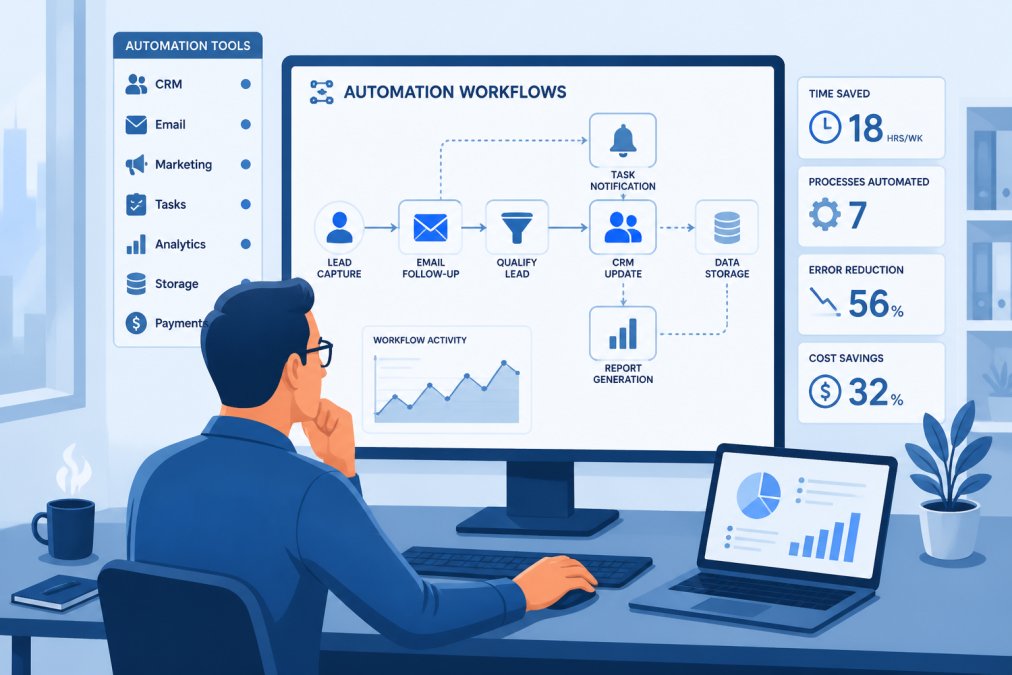
Start small. Pick one process, automate it, measure the impact, then move to the next. Incremental automation is more sustainable than trying to automate everything at once.
Assemble and Lead a High-Performing Team
Scaling is ultimately about building a team that can execute your vision without you.
Start with clarity on what you need. Hire specialists with clear roles and responsibilities. Define what success looks like for each role.
Hiring for cultural fit is as important as hiring for skills. Skills can be taught. Culture fit determines whether someone will thrive in your environment.
Invest in structured onboarding. Assign a mentor, provide training materials, and check in regularly during the first 90 days. The cost of good onboarding is far lower than the cost of turnover.
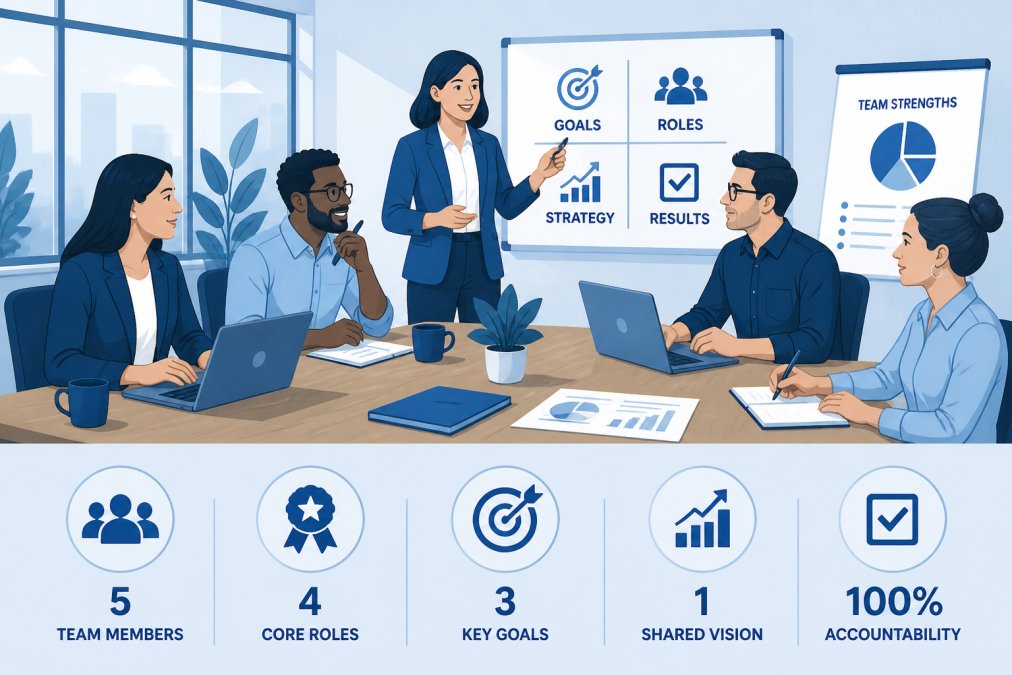
Delegation is a learned skill. Start by delegating small, low-risk tasks. Build trust through successful completion. Gradually delegate more complex work.
Create feedback loops through regular one-on-ones and quarterly reviews. Feedback should flow both directions.
As you build your team, add management layers with clear reporting lines and defined accountability. This prevents communication breakdown and ensures accountability.
Secure Capital and Manage Cash Flow for Scaling
Scaling requires capital. You can bootstrap with cash flow from your existing business, but that limits your speed.
Bank financing is often the first option. If you have revenue, profitable operations, and collateral, you can typically access a line of credit or term loan. You retain full control but are obligated to repay regardless of business performance.
Investor funding brings capital without debt obligation, but you're giving up ownership and control. This is appropriate if you're scaling aggressively and need substantial capital.
Cash flow management is critical during scaling. Build a 12-24 month cash flow forecast projecting inflows and outflows. This tells you when you'll have cash crunches and how much capital you need.
Many scaling businesses fail not because the business model doesn't work, but because they run out of cash. Negotiate longer payment terms with suppliers, accelerate customer payment collection, and maintain a cash reserve. Monitor your cash position weekly, not monthly.
Conclusion: Your Roadmap to Sustainable Scaling
Scaling a small business is about building systems, infrastructure, and a team that allows you to grow revenue without proportional increases in cost and complexity. Successful businesses distinguish between growth and scaling, hit specific readiness indicators, build scalable infrastructure, anticipate common challenges, automate repetitive work, assemble high-performing teams, and manage capital conservatively.
The path from small business to scaled operation requires a strategic blueprint covering your business model, operational systems, team structure, and financial strategy. The California Business Development Center's "Strategic Business Blueprint For Success" provides this framework through over 120 modules, live video classes, and detailed workbooks. The team has worked with hundreds of California businesses through this scaling journey. Schedule a free initial consultation with the California Business Development Center to discuss your scaling challenges and explore how their business development and legal expertise can accelerate your path to sustainable growth.
| Scaling Element | Key Action | Timeline |
|---|---|---|
| Business Infrastructure | Document processes, implement integrated technology stack | 1-3 months |
| Team Building | Define roles, hire specialists, establish onboarding | Ongoing (2-3 hires per phase) |
| Automation | Identify repetitive tasks, implement 1-2 automation tools | 2-4 months per tool |
| Capital Planning | Develop 12-24 month cash flow forecast, identify funding needs | Before scaling begins |
| Quality Management | Define standards, establish measurement, train team | Concurrent with scaling |
Frequently Asked Questions
What's the difference between growing and scaling a small business?
Growth means increasing revenue by doing more of what you already do, hiring more staff, acquiring more customers, expanding inventory. Scaling means increasing revenue while maintaining or reducing costs per unit through systematization, automation, and operational efficiency. When you scale small business operations, you build infrastructure that lets you serve exponentially more customers without proportionally increasing expenses.
How do I know when my business is ready to scale?
Your business is ready to scale when you have consistent revenue, proven product-market fit, documented processes, and a reliable customer acquisition model. You should have eliminated major operational bottlenecks, established KPI tracking, and demonstrated sustainable profit margins. If you're still in survival mode or lack repeatable systems, focus on operational maturity first before attempting to scale.
What role does automation play in scaling a small business?
Small business automation tools eliminate manual, repetitive tasks and free your team to focus on high-value work. Automation reduces operational costs, improves accuracy, and enables you to handle more volume without proportional headcount increases. From email workflows to inventory management to customer service, automation directly improves scalability by reducing human dependency and improving cash flow management.
What are the most common reasons small businesses fail when scaling?
Common scaling failures include insufficient capital and poor cash flow management, inadequate team capacity or weak leadership, premature scaling before achieving product-market fit, underestimating operational complexity, and neglecting customer acquisition cost versus lifetime value metrics. Many founders also face psychological barriers to delegating control, which prevents them from building the team infrastructure needed for sustainable growth.
This article was written using GrandRanker